What It Really Takes to Build a Great Office Space
Before the permits, before the first nail: your most important decision is already made.
There’s a moment every business faces: the lease is expiring, the company is growing, the space no longer fits. Whether it’s a full floor build-out in a Class A tower, a renovation of a space you’ve occupied for a decade, or a second-generation finish-out. At some point, you need a general contractor. How you choose that partner will shape everything that follows.
We sat down with Eric Gilbert, Principal at Scott + Reid General Contractors, to talk through what separates a great office build from a costly one. Eric has spent his career in commercial construction in North Texas. He has seen hundreds of office projects run smoothly, go sideways, and everything in between. What follows is not theory. It is pattern recognition.
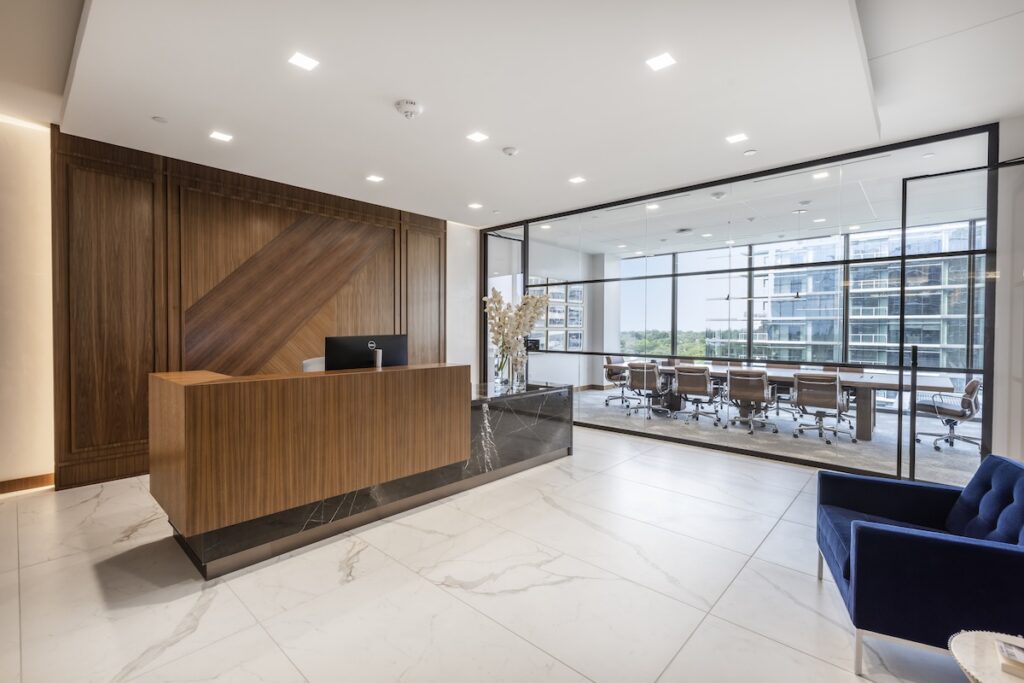
Price vs. Price Certainty
In a competitive bid, the lowest number gets attention. But Eric is direct about what that number can sometimes obscure.
“Price is important. But price certainty is even more important.”
The distinction matters more than most clients realize. A bid that has not been stresstested against real market conditions, real labor availability, and a thorough read of the drawings is not a savings. It is a deferred cost. In today’s market, where material prices and labor shift constantly, a gap in the upfront numbers tends to resurface later as change orders or schedule delays. This can lead to frustration across all stakeholders.
The goal is a number you can build a project on, not just win a bid with.
What Happens Before You See A Number
By the time Scott + Reid puts a proposal in front of a client, preconstruction has already done significant work: testing the commodities market, confirming subcontractor pricing, vetting lead times on critical materials, and pressure-checking the schedule against real labor capacity.
When asked what a GC should communicate from the first meeting, Eric states:
“A sound understanding of the drawings is critical. A GC should have a commitment to involving preconstruction early. They should be transparent about potential challenges before the project begins. Not every project is set up to be hard bid. The right GC will tell you that, help you understand your options, and work through the design alongside the full project team to get to a number that reflects reality.”
This is also where budget conversations belong. When a GC understands what a client can spend, they can build a value engineering list alongside the architect that protects design integrity while giving the owner real flexibility. The time for those conversations is before the project starts.
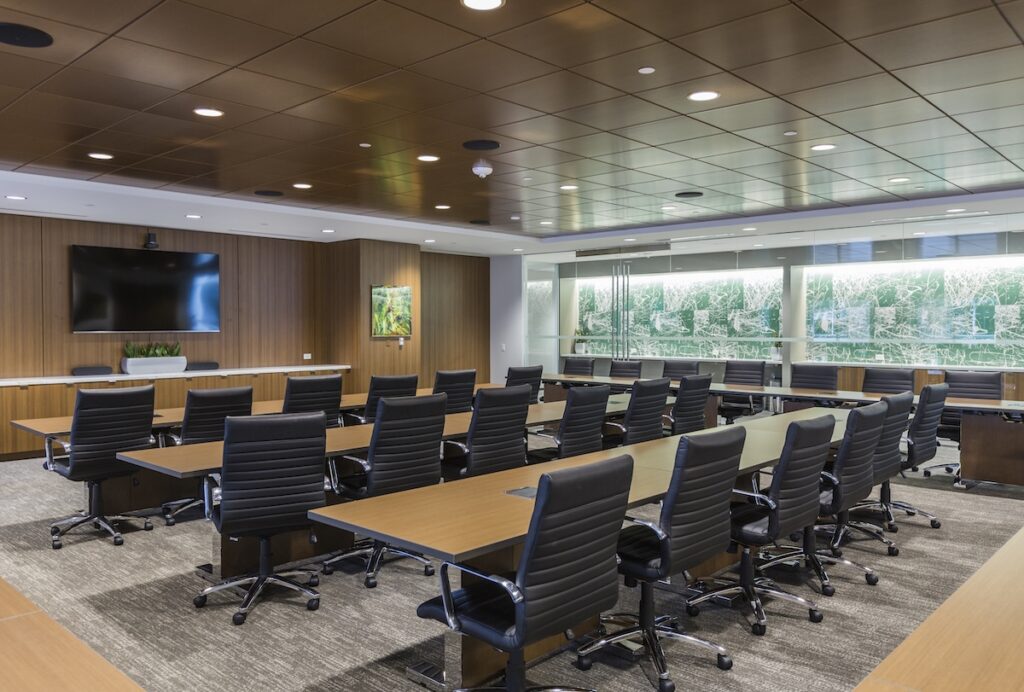
The Deadline Is Already Set. The Schedule Has To Catch Up.
Office construction timelines are almost always driven by external pressure: a lease expiration, a relocation date, an opening that has already been announced. The GC’s job is to build a plan that actually hits it.
Eric reinforced that experienced general contractors can compress a schedule without sacrificing quality.
“There are always ways to get there: off-hours work, smart trade sequencing, addressing punch items after move-in. The key is having the right people with the right experience and understanding a client’s goals and budget. One of the most powerful tools is identifying heavy lead-time items early in preconstruction so a material delay does not become a schedule crisis six weeks in.”
For high-finish Class A office environments, a tight schedule requires the right subcontractor relationships. The quality of labor matters. A sequence that works on paper falls apart if the trade partners cannot execute to the standard the design demands. Experience in this market, with qualified subs, is what makes a compressed schedule deliverable rather than just promised.
Understanding the Allowance Before You Sign the Lease
One of the most common sources of budget surprise in office construction is the gap between a landlord’s tenant improvement allowance and what a project actually costs. Actual build-out costs vs a TI allowance can run $80 to $150 or higher, depending on finish level, MEP scope, and design complexity. That gap is the tenant’s responsibility, and it is not always clearly explained. This is where the right general contactor can help weigh options based on client expectations.
“The tenant allowance is a starting point, not a finish line. The best thing we can do for a client is get involved early enough to help them understand what their budget actually buys in today’s market, so there are no surprises after they have committed to the space.”
Getting a GC involved early in the process can change the conversation significantly and help mitigate risks.
Second-Generation Spaces: Know What You Are Inheriting
Many office projects begin with a second-generation space, a suite that was previously occupied and already carries someone else’s mechanical, electrical, and plumbing infrastructure. That existing build can be a real cost advantage. It can also carry hidden liabilities: HVAC systems near end of life, electrical capacity that does not support current density needs, or ADA gaps baked into the original layout.
The way to know which you are inheriting is a pre-lease walkthrough with an experienced contractor.
“Have a contractor walk your space with you. We can tell you during a site visit what the bones are worth, which systems are reusable, where the real costs are hiding, and how the landlord’s TI compares to the actual scope of work. That conversation costs nothing. Finding out after you have signed can be very expensive.”
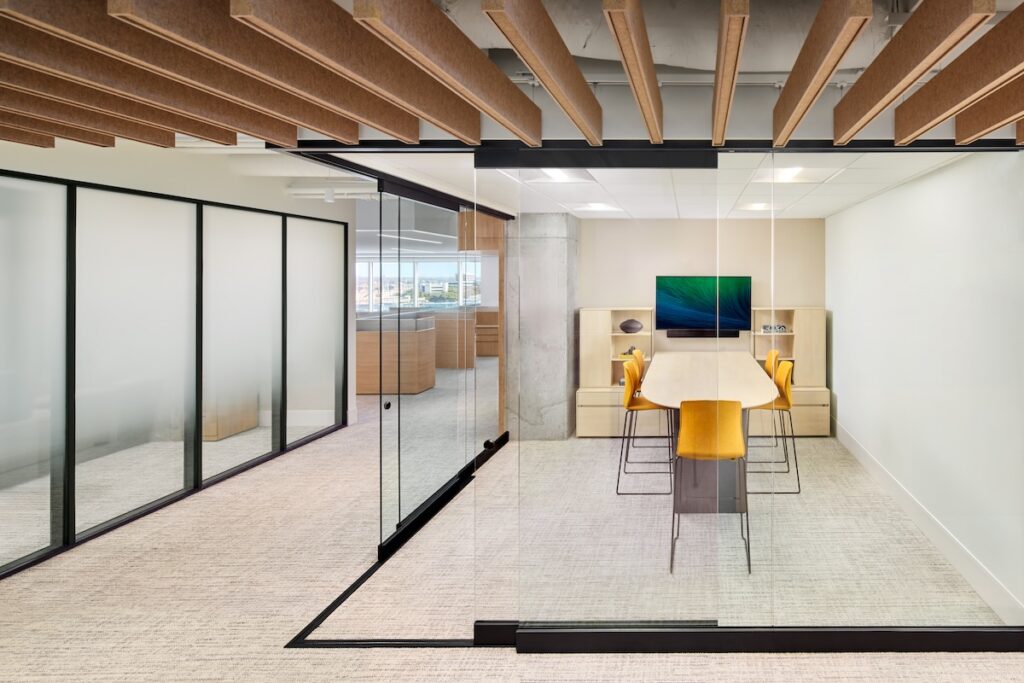
Renovating Without Shutting Down
Occupied renovations are more common than they used to be and less disruptive than
most clients expect, provided the general contractor has done it before.
“Working in an occupied space requires extensive communication on the front end around how the logistics plan will be set up and how phasing will work. Done right, it allows the client and their team to make the right day-to-day adjustments as construction phases through the project, without disrupting the business.”
The logistics plan is the work: which entrances are used, when demolition happens, how freight moves through a shared building. A GC with established relationships with property management and building engineering already knows the rules and how to work within them. Safety on occupied projects, containment, dust control, clearseparation between construction zones and active workspace, is planned before day one and enforced through the last.
When Something Comes Up Mid-Project
It will. Office construction is complex, and complexity produces surprises. The question is whether your GC has the experience and authority to handle them without it becoming your burden.
“Open communication with all active players, architects, property managers, ownership, is critical. We address changes in scope or materials days or weeks before they affect the schedule. That is what the two-week look-ahead and the OAC meeting are for. Taking ownership of the overall process and navigating those challenges with the full project team is the job.”
Which brings Eric to the one question he says every client should ask before signing a construction contract:
“Do you have the ability to make decisions at field level?”
A GC whose team has to escalate every field decision slows everything down. When something unexpected happens on a job site, the person running your project needs the authority and experience to resolve it. That is how a project stays on schedule.

Local Knowledge Is Crucial
Eric talks about Texas market knowledge the way a veteran of this market should. Subcontractor relationships in Dallas and Houston matter in ways that do not show up in a proposal. A GC who has worked alongside the same trades across years of projects has shared history, mutual accountability, and relationships that mean a call gets returned when the schedule tightens. Permitting timelines, material lead times, building regulations in a multi-tenant high-rise versus a suburban campus. These realities are
learned by doing.
“Work history in the interiors discipline is the most important thing. The right subcontractor base. A team that genuinely understands the drawings and the client’s vision. If we are doing a law office build-out, we know exactly how we are going to run that job. That comes from having done it before, in this market, with these people.”
Vet The Team
Eric’s advice to any client evaluating general contractors is straightforward: do the work. Interview your top candidates. Ask them what concerns them about your project specifically. Ask them what has gone wrong with similar jobs and how they handled it. Ask who will be running your project day to day, and then ask to meet that person. The right GC will welcome those questions. They will have specific answers. And you will learn very quickly whether you are talking to a team that has read your documents or one that has memorized a presentation.
The Partnership Starts Before the Contract
At Scott + Reid, our office construction work spans corporate headquarters, professional services firms, financial institutions, law offices, medical practices, and more, across Dallas and Houston. We bring preconstruction discipline, deep subcontractor relationships, and field leadership with the authority to make decisions when it matters. If you are evaluating GCs for your next office project, we would welcome the conversation.